White-label ticketing: what it changes for an organizer
On a marketplace, the buyer belongs to the marketplace
What white label actually changes
The questions to ask any white-label provider
How to compare costs fairly
Start with one complete event
Where Enigma Events fits
Frequently asked questions.
Related articles
Offline check-in: preparing the door before doors open
Guest lists, staff, and press: one registration instead of five spreadsheets
See it with your own event.
Platform
Use cases
Resources
Company
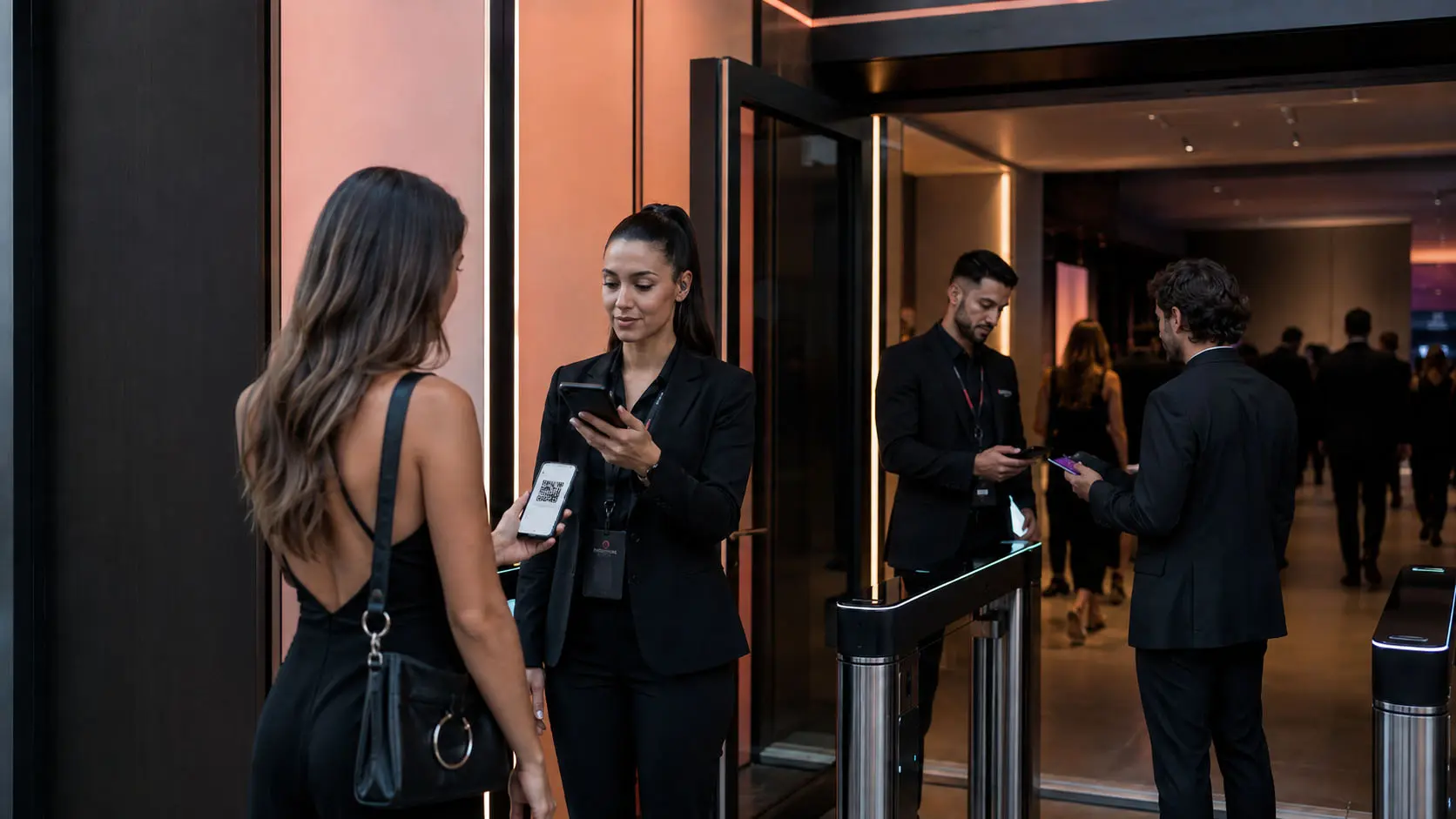
Offline check-in: the staff app keeps validating tickets even when the venue signal drops. See how it works
Create and publish
Sell and collect
Run the door
Measure and communicate
Resources · Ticketing
White-label ticketing means buyers purchase on your site, under your brand, while a platform runs checkout, tickets, and the door. What changes is ownership: the buyer relationship and the data stay with you.
November 17, 2026 · 4 min read · Enigma Events team
Key takeaways
On a marketplace, the buyer belongs to the marketplace; with white label, the relationship stays with you.
White label gives you a better place to receive demand. It does not create demand by itself.
Ask about your own domain, your buyer export, where the money goes, and what happens offline.
Test with one complete event and measure the line, the campaigns, and new buyers.
White-label ticketing means your buyers purchase on your website, under your domain and your brand, while a platform runs the checkout, the tickets, and the door behind the scenes. What changes for an organizer is ownership: the buyer relationship, the data, and the experience stay with you instead of with a ticketing marketplace.
It is not the right move for everyone. If you run one event a year and nobody knows your name yet, a marketplace's traffic can matter more than your brand. If you run a regular series, a venue, or a festival that comes back every season, white label usually pays for itself in what you learn about your own audience.
When someone buys on a ticket marketplace, they see the marketplace's logo, get the marketplace's confirmation email, and browse other organizers' events on the same page. From their point of view, they bought from the marketplace. You are a listing.
That works while you need discovery. It becomes a problem when you announce your next date and realize you cannot reach the people who bought last time unless the marketplace shares them with you.
In day-to-day terms, these are the differences an organizer notices first:
The sale happens at your address, so every ad and every email points to a page you control.
Your logo and colors appear on the event page, in the buyer's app, and in the emails they receive.
Your buyer list lives in your account, where you can view and export it.
Your event does not sit next to a competitor's on the page where people buy.
You decide how presales, phases, ticket limits, and discount codes work.
What white label does not change: people still need a reason to show up. It gives you a better place to receive demand and a clearer view of where it came from. It does not create demand by itself.
Most providers will say they offer white label. The details are where they differ. Ask these before you sign anything:
Can buyers purchase on my own domain, or only on a subdomain of yours?
Can I hide your logo on my page, and use my own browser tab icon?
Whose name and details appear on the receipt the buyer gets?
Can I export my buyer list whenever I want, without asking?
Does the money go to my own payment account, or through yours first?
What happens at the door if the venue's internet goes down?
The last question sounds unrelated to branding. It is not. Your buyers will remember the line at the door far longer than the color of your checkout button.
A per-ticket fee is easy to compare and easy to misread. Put the full cost of running an event on the same page, not just the cost of selling it:
The payment processor's own fee, which you pay with any provider.
Card terminals for the box office, if you sell on site.
Setup: your seat map, your pages, and training for the people who sell and scan.
The cost of a slow or broken door, in refunds, complaints, and reviews.
The cost of not being able to sell to your own audience again.
The safest way to test white label is one full event, end to end: the page, the sale, the box office, and the door. Pick an event with an audience size you know well, so the numbers mean something.
Measure three things: how long the line took at peak, which campaigns brought in orders, and how many new buyers ended up on your list. With those answers, the next decision is no longer a guess.
If the door is your biggest worry, read how to prepare offline check-in before doors open . If your event has a lot of guests, staff, and press who come in without a ticket, see one registration instead of five spreadsheets .
Enigma Events offers both paths: a commission per ticket sold with no fixed fee, or a monthly White Label fee that adds your own domain, your brand colors in the app, your browser tab icon, the option to hide the Enigmatech logo, and your choice of QR code mode. You collect through your own Stripe or PayPal account. You can compare the two ways to buy it or see what white label includes.
Questions
It is a ticketing platform that runs under the organizer's brand: buyers purchase on the organizer's page and domain, see its logo, and get its emails, while the platform handles checkout, tickets, and access control.
If you run one event a year and nobody knows your name yet, a marketplace's traffic may matter more. White label pays off when you run regular events and want to sell to your own audience again.
Yes. The payment processor you connect charges its own fee for each payment, with any ticketing provider. Compare that line separately from the ticketing fee.
Keep reading
Access control · 4 min read
Offline check-in works when every scanning phone holds the ticket data before the crowd arrives, validates without a server, and uploads entries when the connection returns. Preparing it is mostly timing.
Read article
Accreditation · 4 min read
Treat everyone who comes in without a ticket as one roster with categories, daily quotas, and zones. Let each company register its own people, set a cutoff, and give the door badges it can scan.
Read article
In the demo we use your venue, your tickets, and your door as the example.
Enigma Events is the ticketing, registration, and access control platform organizers use to create, sell, and run events under their own brand. Part of EnigmaSuite .
White label
Events and tickets
Seat maps
Payments and box office
Access control
Accreditations
Campaigns and reports
Producers and promoters
Event agencies
Venues and theaters
White-label ticketing
Fairs, expos, and festivals
Corporate events
Book a demo
Pricing
Articles
Customer sign-in
EnigmaSuite
Enigma Workforce
+1 647 509 5220
Privacy notice
Trust center
Español
English



 See how it works
https://enigmaevents.net/events/en
Producers and promoters Concerts, festivals, and tours.
Pricing
Resources
ES
Book a demo
how to prepare offline check-in before doors open
one registration instead of five spreadsheets
EnigmaSuite
Customer sign-in
Enigma Workforce
Privacy notice
Trust center